
Tutorials
English · Guide
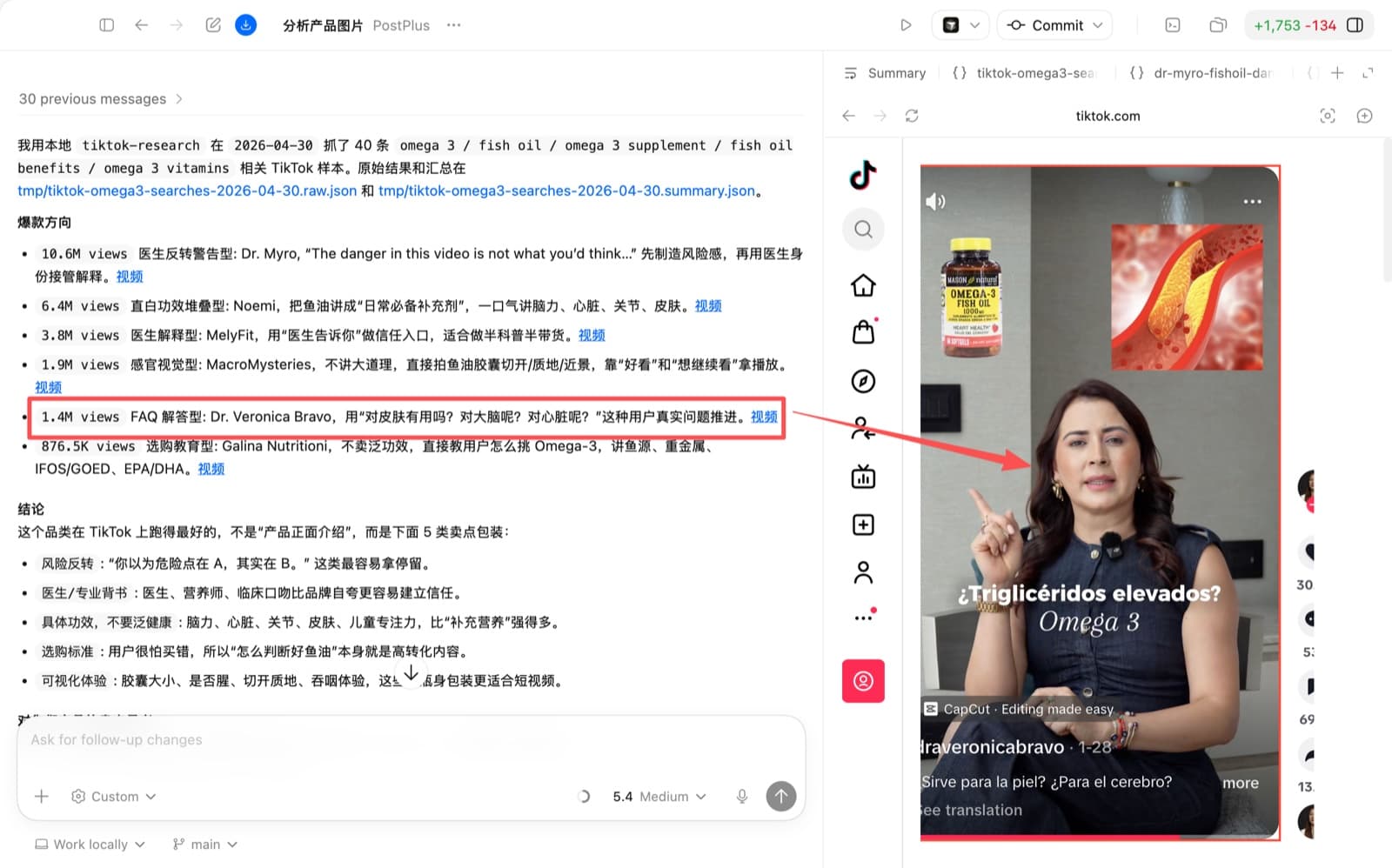
How to Find Social Videos Worth Learning From
A practical PostPlus workflow for finding TikTok and Instagram videos that are useful creative references, not just high-view distractions.
English · Guide
A practical PostPlus workflow for finding TikTok and Instagram videos that are useful creative references, not just high-view distractions.
Finding social videos worth learning from means filtering for videos whose performance is likely caused by reusable creative decisions: the hook, audience framing, product story, comments, and original posting context. A useful reference is not simply popular. It should show a repeatable narrative pattern that another brand can adapt without copying.
PostPlus is a short-form marketing workflow for local AI agents. It helps teams collect public social examples, inspect video structure, and turn winning patterns into scripts, assets, and production plans.
A useful social-video reference is a public short-form video whose success can be explained by repeatable creative decisions, not only by creator fame, paid distribution, or timing. In the PostPlus workflow, this is the first step before deconstructing viral short-form videos, writing AI-assisted scripts, or generating AI video assets.
Use a video as a creative reference only when it passes three checks.
| Check | What to Look For | Why It Matters |
|---|---|---|
| Organic lift | The video appears to win through the content itself, not obvious paid distribution. | Paid reach can hide weak creative. |
| Low-follower breakout | The account is not already dominant in the niche. | Smaller accounts make creative quality easier to inspect. |
| Commercial comments | Viewers ask where to buy, how much it costs, or how to get the product. | Comments reveal demand, not only entertainment value. |
TikTok's own Creative Center says its Trends surface can show trending hashtags, songs, creators, and videos by region and industry. Use that as a starting point, then narrow the list with the creative filters above.
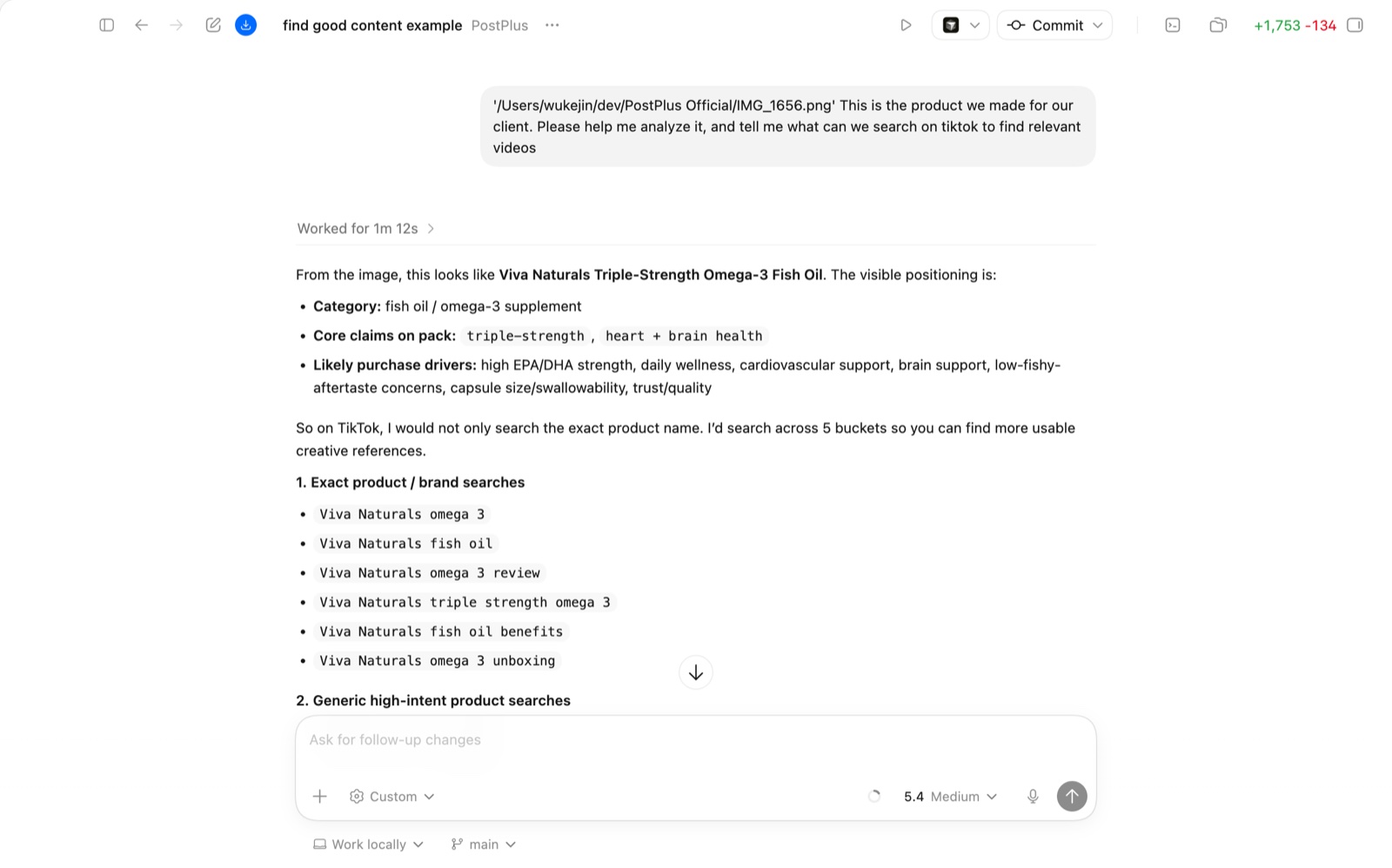
The first prompt should describe the product and ask the agent what to search for. Do not start by browsing random viral content.
[put your product content or local path here]
This is the product we made for our client.
Please help me analyze it, and tell me what we can search on TikTok to find relevant videos.
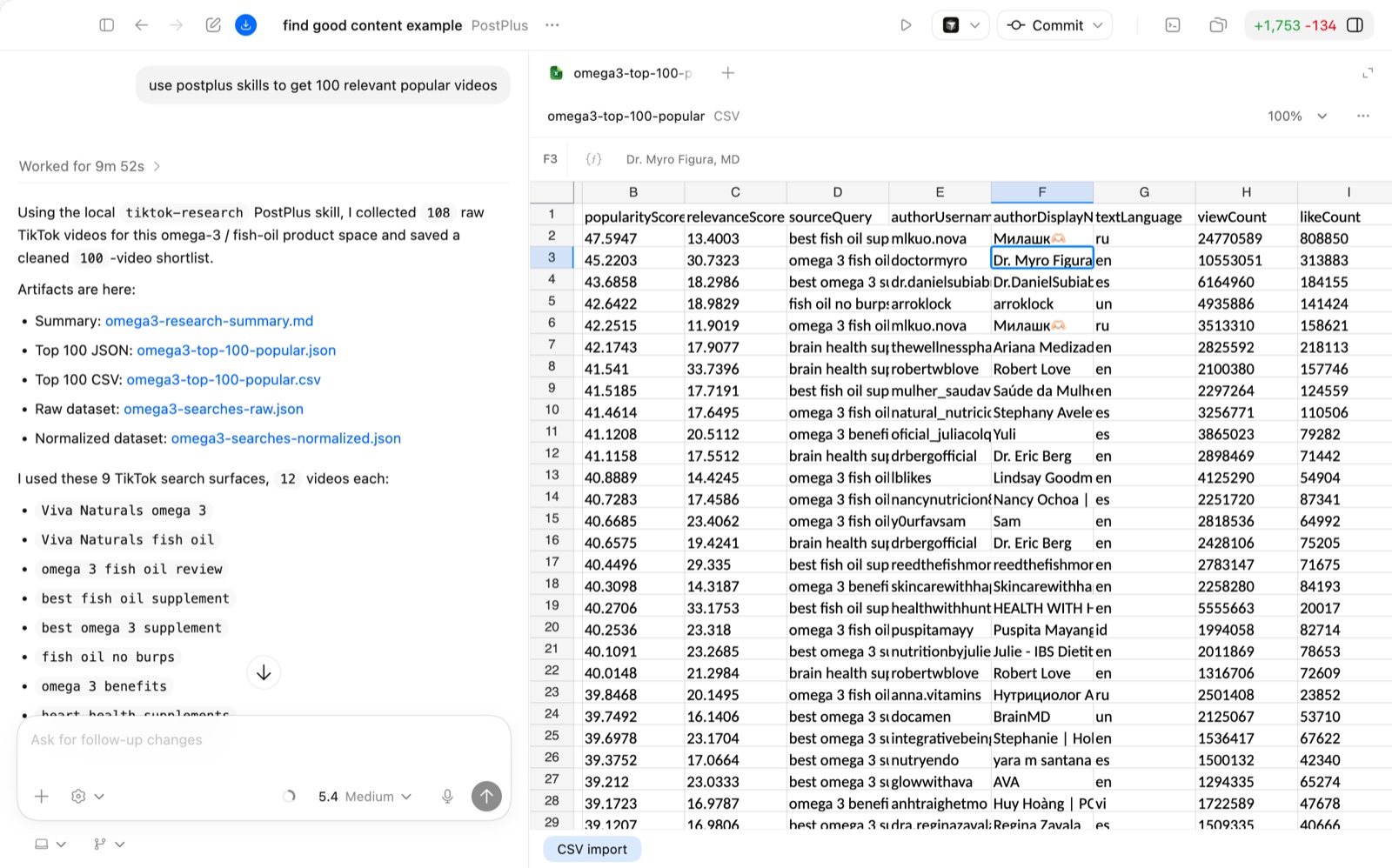
After the agent proposes search directions, ask PostPlus to collect a large enough sample:
Use PostPlus skills to get 100 relevant popular videos.
The goal is a research set, not a single favorite clip. A single viral video can be an accident. A cluster of related videos reveals a pattern.
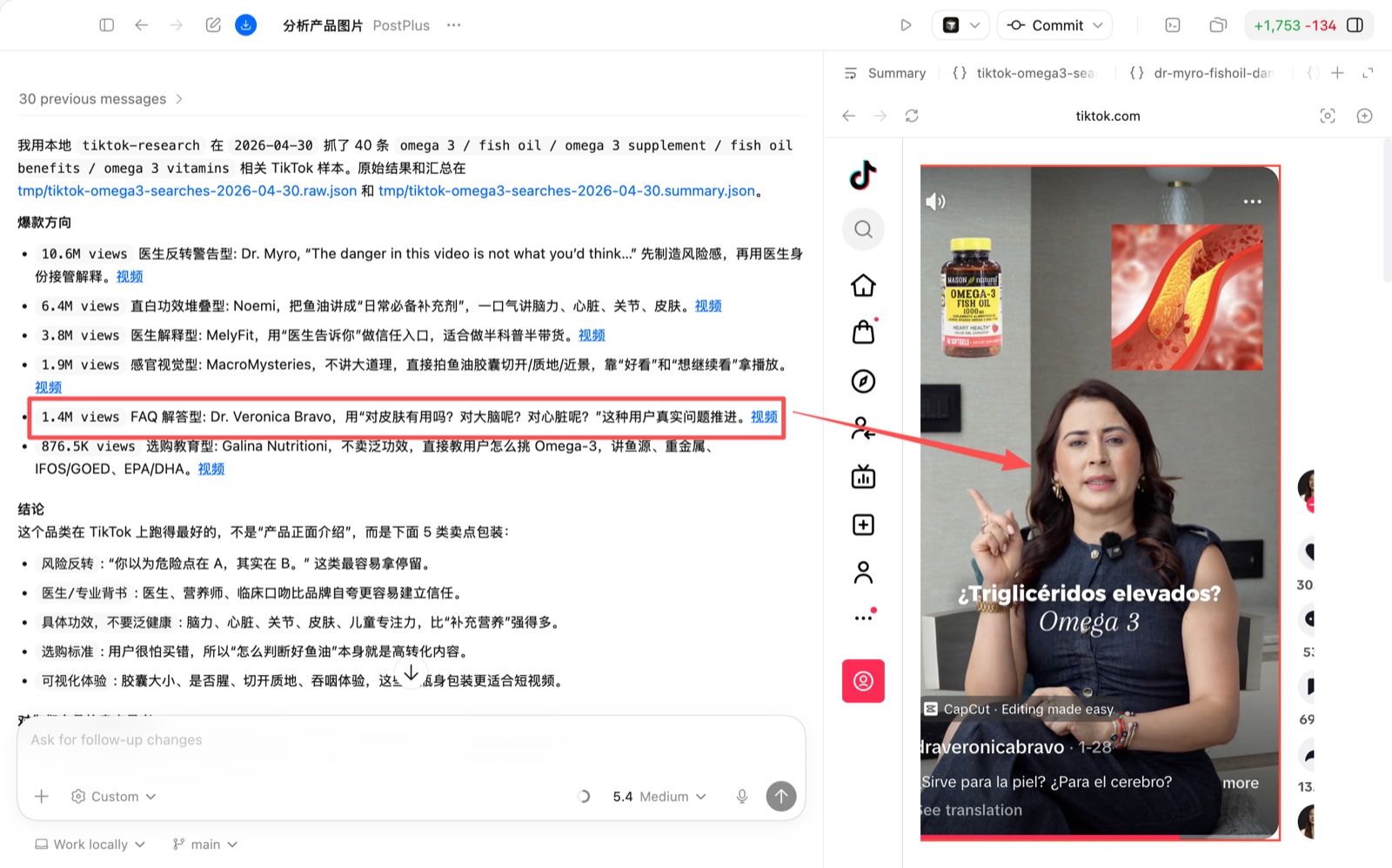
Not every high-view video is worth studying. Remove references that are hard to learn from:
A useful creative reference usually has a visible mechanism: a hook that stops the scroll, a relatable audience situation, a concrete product role, and a comment section that shows real intent.
Low-follower breakout videos are useful because they reduce one major confounder: account power. If an account with 10,000 to 50,000 followers produces a strong post, the creative pattern is often more visible than it is on a celebrity or major brand account.
Use this prompt:
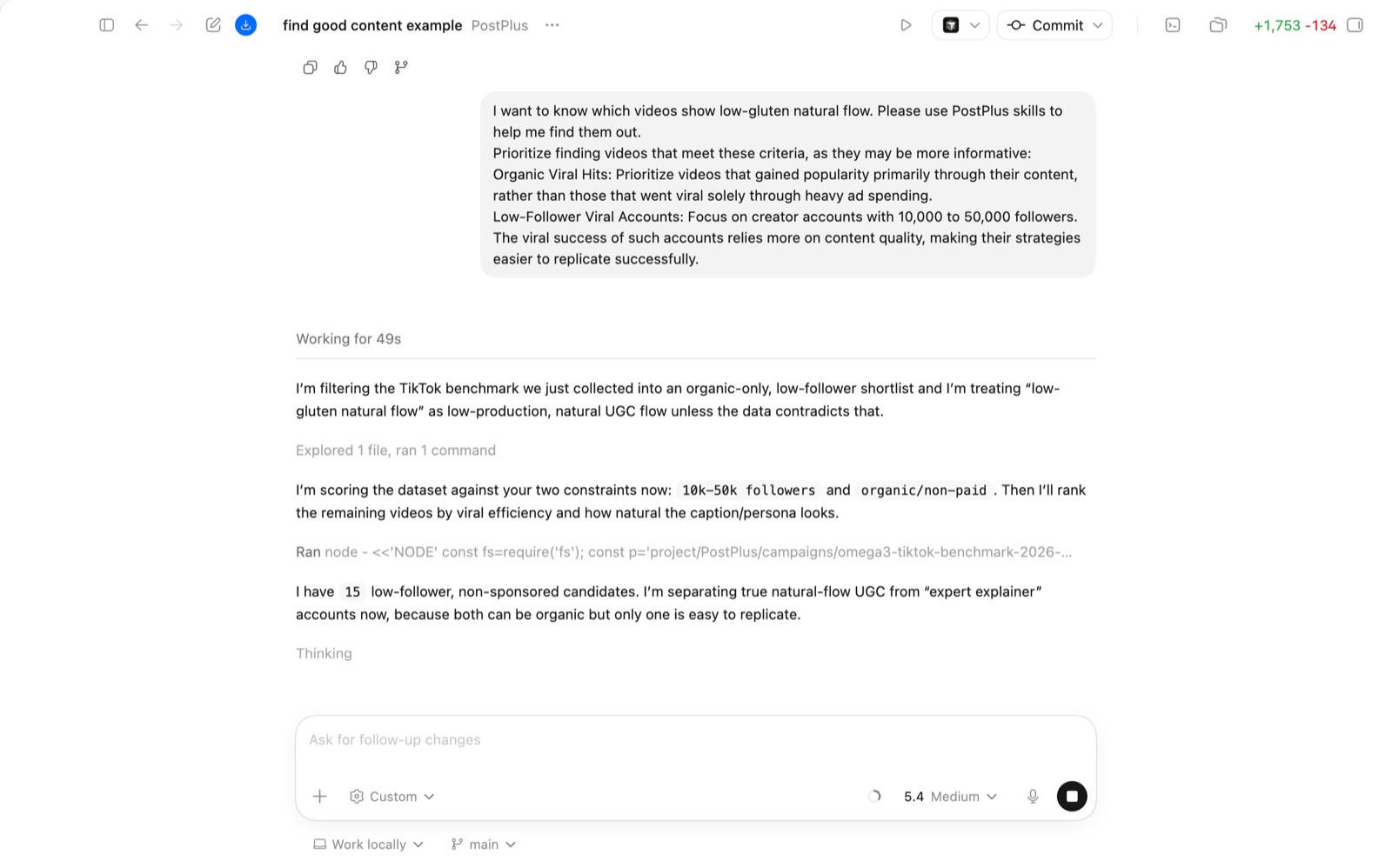
I want to know which videos show organic viral lift.
Please use PostPlus skills to help me find them.

Prioritize videos that meet these criteria:
- Organic Viral Hits: videos that gained popularity primarily through content rather than heavy ad spending.
- Low-Follower Viral Accounts: creator accounts with 10,000 to 50,000 followers.
- Replicable Story: a hook, premise, or product demonstration another brand can adapt.
This does not prove a video is organic. It gives the agent a concrete screening rule and forces the review to focus on explainable creative patterns.
Views show reach. Comments often show intent. For product marketing, the best reference videos are the ones that make viewers ask useful questions:
Use this prompt:
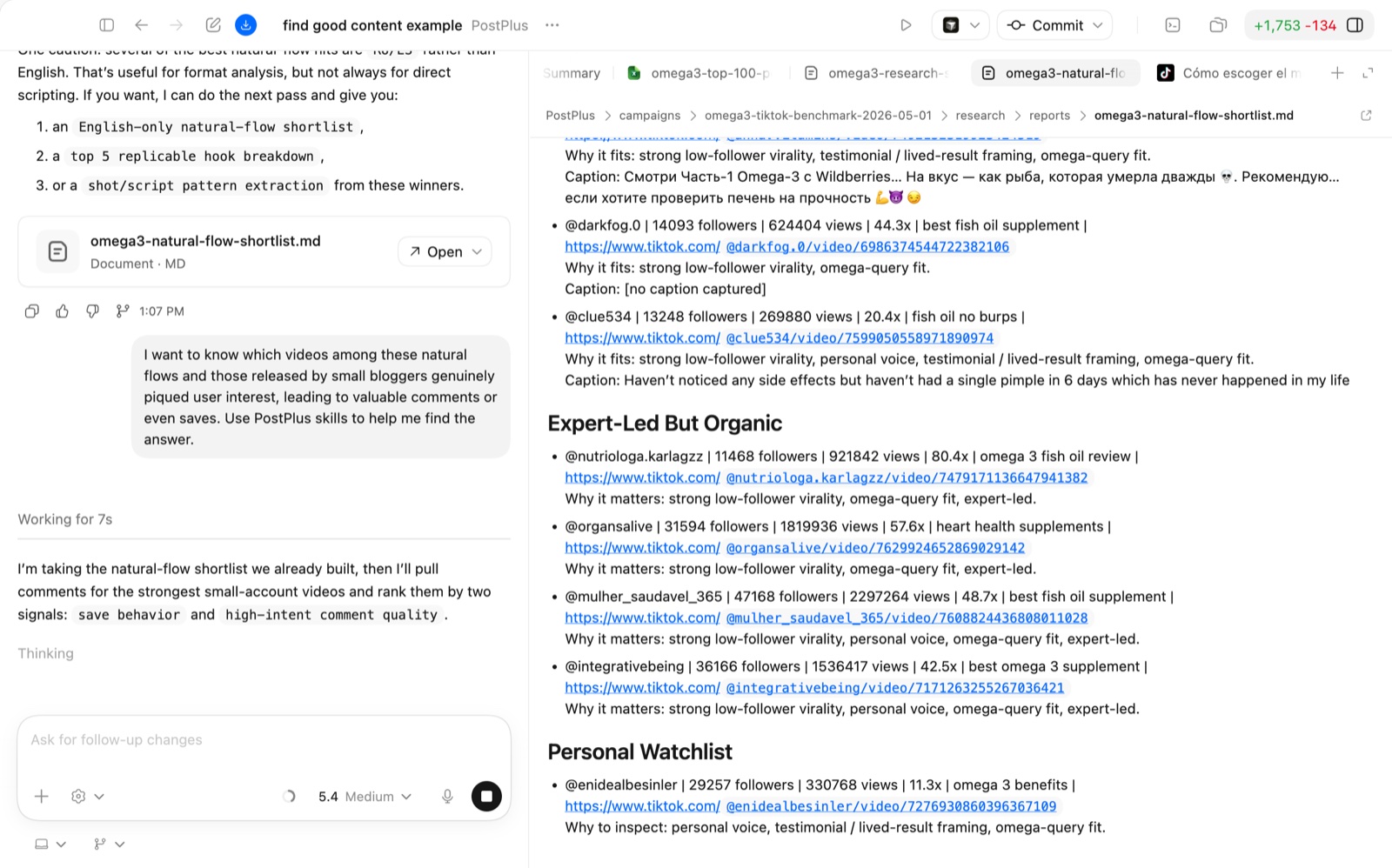
I want to know which videos among these organic and low-follower examples genuinely piqued user interest.
Use PostPlus skills to find videos with valuable comments, saves, or product-intent questions.
When comments contain product questions, the video is not just holding attention. It is creating demand signals that can shape the next script.
Before you send a video into deeper analysis, score it quickly.
| Question | Pass Signal |
|---|---|
| Who is the video speaking to? | The audience is obvious in the first few seconds. |
| What problem or desire does it activate? | The viewer can name the pain or aspiration. |
| What role does the product play? | The product appears as the solution, proof, or next step. |
| Why did viewers keep watching? | The hook creates tension, surprise, or recognition. |
| Why did viewers comment? | The comment section shows curiosity, objection, or buying intent. |
If a video cannot answer these questions, it may still be entertaining, but it is a weak reference for production.
No. A viral video is only useful when its success can be explained by creative decisions that are visible and repeatable. Some videos win because of creator fame, paid distribution, controversy, or timing.
No. Use the reference to understand structure: audience, hook, pacing, proof, emotion, and CTA. Copying the surface execution makes the work less original and usually less durable.
Large samples reduce overfitting. One video can mislead you. A cluster of similar wins shows which patterns are more likely to be reusable.
Start with low-follower organic wins and commercial comments. This combination usually surfaces videos where content quality and viewer intent are both visible.